



F-PRO
M-PRO
TESLA
ERMLG




L-PRO
T-PRO
B-PRO
S-PRO
TESLA 4000
Power System Recorder with CDR, PMU and IEC 61850 station bus protocol
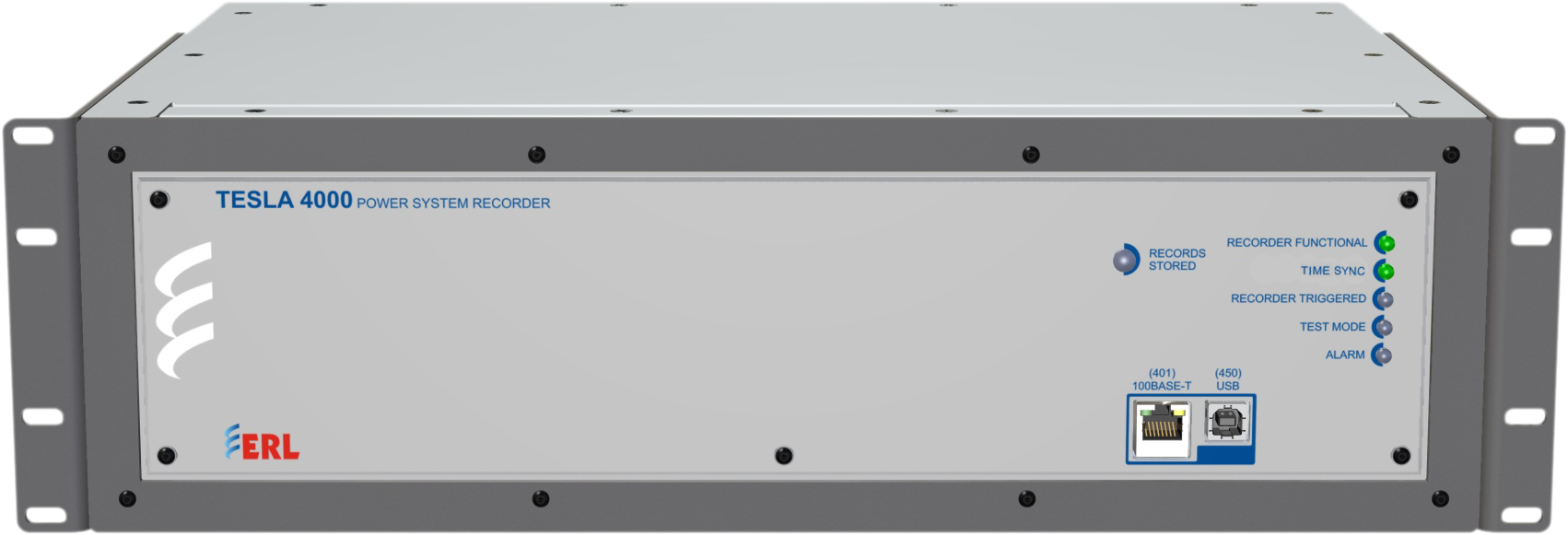

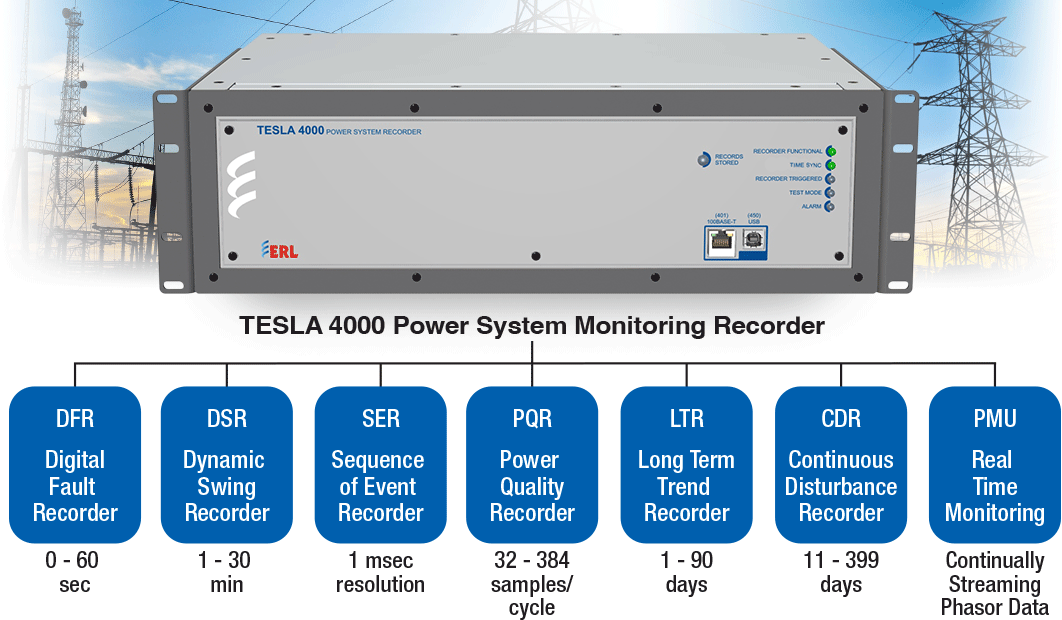
TESLA 4000 is an easy-to-use and cost effective, state-of-the-art, multi-time frame (simultaneous) digital fault recorder. Its integrated Phasor Measurement Unit (PMU) functionality streams synchrophasor data for wide area monitoring. Enabled with IEC 61850 protocol, TESLA has advanced communication capabilities that, together with its powerful recording features, provide the most versatile and complete monitoring of power system health.
With over 1000 user definable triggers, TESLA 4000 creates records simultaneously in 3 time domains (fault (fast), swing (slow) and trend records), and also creates event logs. The CDR creates continuous records without triggers which, together with the fault, swing and trend records, provide wide area visibility of system performance. The CDR also creates redundancy in PMU data.
TESLA DFR has 256 virtual inputs to record digital status changes contained in IEC 61850 GOOSE messages, expanding its monitoring capabilities.
Key Features & Capabilities
Simultaneous recording in three time domains: fault (fast), swing (slow), and trend records
High-speed transient fault recording at up to 384 samples per cycle (23,040 Hz)
Dynamic swing recording from 10 seconds up to 30 minutes per record
Trend logging across up to 60 user-defined channels
Integrated Phasor Measurement Unit (PMU) for real-time wide-area monitoring
Up to 36 analog and 64 digital inputs, plus 256 IEC 61850 GOOSE virtual inputs
Over 1,000 user-definable triggers for comprehensive automatic capture
Cooperative mode: view records from multiple Tesla units as a single combined record
IDEAL FOR Grid control centers, protection engineers, system planners, and utilities that need the most complete and accurate record of power system events — both for post-fault forensic analysis and for ongoing real-time wide-area monitoring.